Slowing it down
I’m lucky to live by the coast, and when it’s too windy for sailing and I want something different, the surfers never fail to surprise. Widely associated with North Cornwall, there can also be good waves to enjoy in South Devon, which means either Bantham Beach or Bigbury Bay.
Photographers like to ‘play’, it’s not always about using the same settings and a familiar composition, we like to challenge the rules and see what happens - creativity by other means. On the beach, there are some obvious shots, but I like taking a little more time ‘looking’ for something a little different. A lot of Surf photography is pin sharp shots of wave, surf and surfer. They’re up on the board for seconds, so a fast lens and plenty of memory cards for tracking shots are the norm. But for my own interest, I’m looking for something else, an image that still shows movement, but differently.
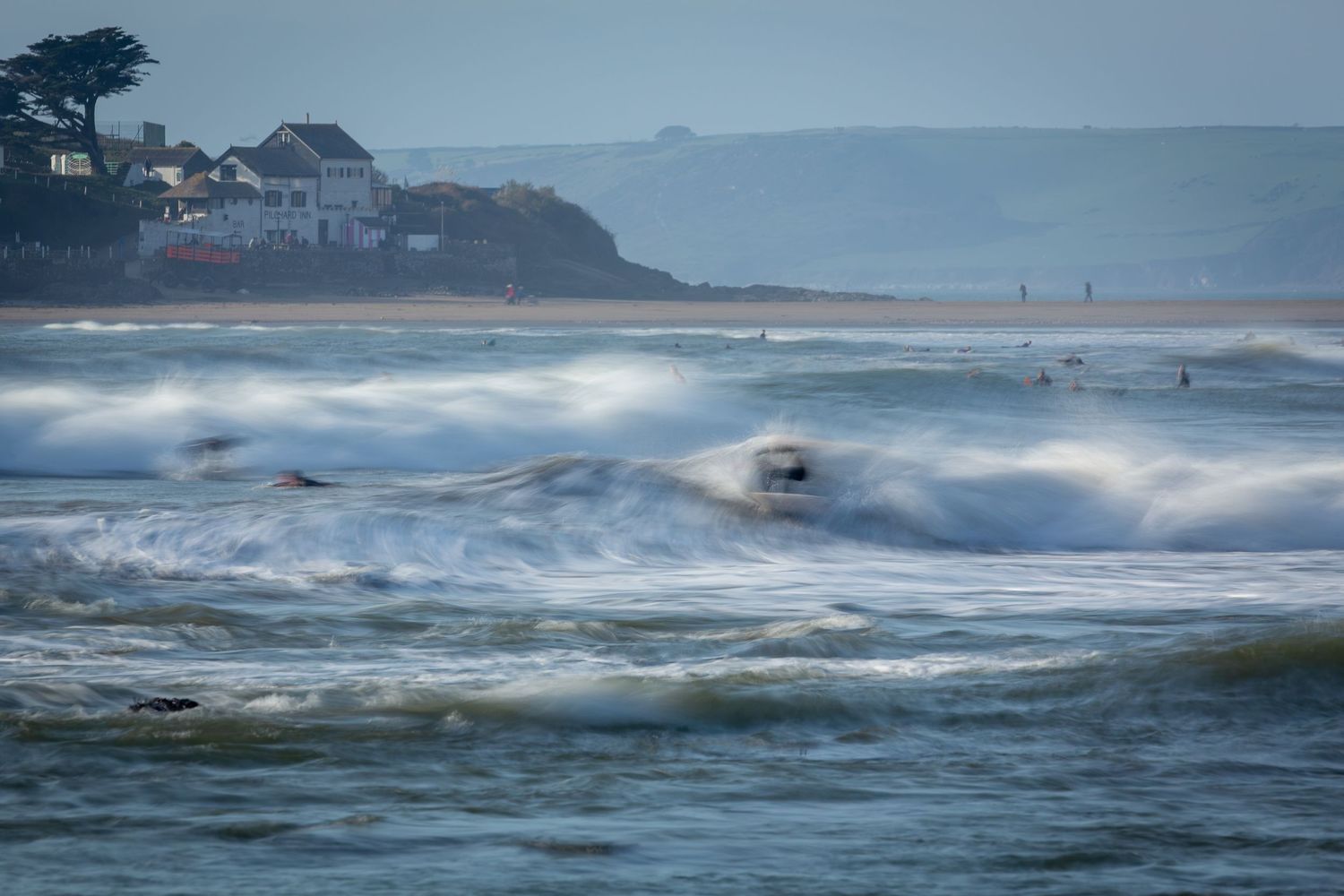
Finding a reasonable spot amongst the rocks, I set up with a tripod, not something I use very often on the water, but essential for slow exposures. On a good day in this location there are always plenty of people in the water - surfers, kayaks, windsurfers and bodyboarders. Bantham allows for some reasonably close up photography, but getting a sense of place is also important. It’s nice to have an island backdrop instead of the usual horizon. Slowing down the exposure is simply achieved by using filters to slow the amount of light hitting the sensor, but adding a polariser - something designed to reduce glare & reflection - the result is quite different.
What I like about this shot, is the ‘paint’ like finish to the image - there’s still movement, but there’s almost a variety of brush strokes across the shot. Back home in the edit, the image doesn’t require too much input, bringing some of the highlights up and adding some de-noise to smooth out some of the water.
100-400mm / ISO320 / f14 / Exposure Time 0.4